Dive deep into Canon’s expanding RF mount cinema ecosystem. Discover how the C400 and C80 are setting new standards for image quality and production versatility with new full-frame BSI sensors and powerful connectivity.
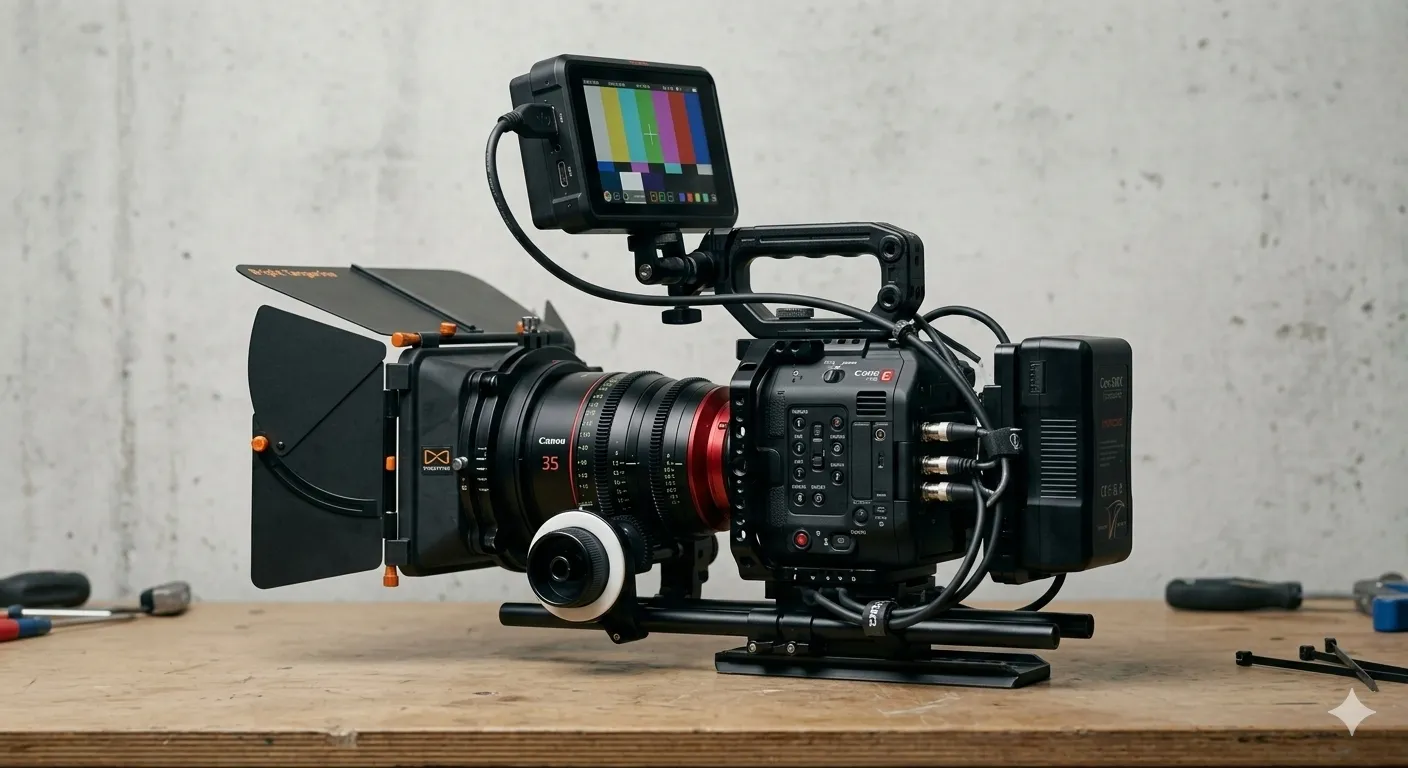
Canon has decisively accelerated its commitment to the native RF mount within its professional Cinema EOS lineup. While the EOS C500 Mark II and C300 Mark III utilized older sensor technology and adaptable EF/PL mounts, the introduction of the EOS C400 and EOS C80 signifies a full-scale migration to the RF platform. These new 6K full-frame back-illuminated (BSI) stacked CMOS sensors represent a significant technological leap, offering improved color science, faster readout, and excellent low-light performance. Combined with robust mechanical engineering and professional I/O, this ecosystem is bridging the gap between compact production and full-scale cinema.
1. The Core Technology: Next-Generation 6K BSI Sensors
The foundation of both the C400 and C80 is Canon’s advanced 6K full-frame BSI stacked CMOS sensor. This is not simply a carryover from their mirrorless R-series; it is a purpose-built imaging engine designed for cinema workflows.
- BSI (Back-Illuminated) Architecture: By placing the wiring behind the photodiode layer, the BSI design maximizes light gathering, significantly reducing noise in low-light environments and expanding dynamic range.
- Triple Base ISO (C400) / Dual Base ISO (C80): This is a critical feature for technical acquisition. For example, the C400 features base ISOs of 800, 3200, and 12800 (when shooting in Canon Log 2/3). This allows the camera operator to maintain a nearly identical signal-to-noise ratio and dynamic range distribution regardless of ambient light levels.
- Fast Readout & Stacked Design: The stacked architecture dramatically reduces rolling shutter artifacts. This is essential for action sequences, rapid pans, and tracking high-speed subjects, ensuring vertical lines remain straight.
2. Native RF Mount: More Than Just a Mounting Standard
The migration to a native RF mount is not superficial. It offers fundamental technical advantages over the previous EF and PL systems used on older Cinema EOS models.
- Short Flange Focal Distance: The incredibly short distance between the mount flange and the sensor plane allows for more compact and efficient lens designs, particularly for wide-angle options. It also facilitates simpler adaption of vintage or alternate-mount lenses.
- 12-Pin Communication System: This high-speed data interface allows for revolutionary features:
- Improved Autofocus: Facilitates the C400’s use of Dual Pixel CMOS AF II, including Eye, Face, and Body Detection and Animal Detection.
- Advanced Optical Correction: The camera can receive precise real-time data from the lens to correct for vignetting, distortion, and chromatic aberration in-camera.
- Metadata Communication: RF lenses communicate extensive data directly to the camera, which is recorded in the cinema raw light or XF-AVC files, crucial for post-production and virtual production workflows.
3. Integrated Professional I/O and Advanced Connectivity
Canon has learned from the market demand for ready-to-use production tools. The C400, in particular, features a chassis densely packed with professional terminals, eliminating the need for bulky “expansion modules” often required on competitive systems.
- Robust I/O: Standard terminals include 12G-SDI, a dedicated Timecode BNC terminal, a Genlock/Sync terminal, and a Remote terminal. For audio, it includes two dedicated XLR inputs on the body.
- IP Streaming and Ethernet: A built-in Ethernet port supports IP Streaming (SRT/RTSP) directly from the camera, allowing for efficient remote broadcasting, live production, and remote monitoring over a network.
- Advanced Accessory Hot Shoe: The C400 features the Multi-Function Shoe, which can power and pass digital audio from compatible accessories like the Tascam CA-XLR2d audio adapter, providing up to four channels of audio input in total.
4. Codecs and Media: Maximizing Versatility
The Canon RF Cinema lineup utilizes Cinema RAW Light, a highly optimized compressed RAW codec that offers maximum post-production flexibility (12-bit RAW) without the unmanageable file sizes of uncompressed RAW.
- Compression Options: Cinema RAW Light offers LT (Light), ST (Standard), and HQ (High Quality) modes (depending on resolution/frame rate), allowing productions to prioritize file size or maximum image detail.
- Alternative Codecs: For workflows requiring faster turnarounds, the cameras offer 10-bit XF-AVC (4:2:2) and the newer, highly efficient XF-AVC S and XF-HEVC S formats (both 4:2:2 10-bit), which utilize H.264 and H.265 compression, respectively.
- Direct-to-SSD Recording: In addition to internal CFexpress Type B and SD card slots, the cameras feature high-speed USB-C ports that allow direct recording to external, high-capacity USB-C SSDs.
5. Third-Party Integration and Full-Scale Rigging
The true test of a “cinema ecosystem” is its third-party support. The rapid emergence of accessories specifically designed for the C400/C80 geometry proves market confidence.
- Wooden Camera Ecosystem: Wooden Camera has launched a dedicated “Elite Accessory System” for the C400. This includes an essential ARRI-standard Dovetail Plate, a reinforced Top Handle with integrated 15mm rod support, and a complex PL-mount Adapter Support system.
- Bridging to Cinema Standards: This type of third-party rigging effectively bridges these cameras from a compact, “run-and-gun” configuration into full-scale cinema productions, supporting large matte boxes, heavy PL-mount zoom lenses, wireless follow focus motors, and advanced power distribution.
Key Features of the RF Cinema Ecosystem
- Native RF Lens Mount with 12-pin communication
- New 6K Full-Frame Back-Illuminated (BSI) Stacked CMOS Sensors
- Multiple/Triple Base ISO for maximized dynamic range (C400)
- Cinema RAW Light recording (12-bit)
- Robust I/O including 12G-SDI, Timecode, and Genlock (C400)
- Dual Pixel CMOS AF II with Eye/Face tracking
- IP Streaming (SRT/RTSP) and Gigabit Ethernet connectivity