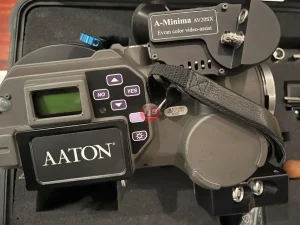
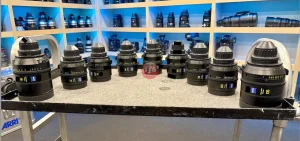
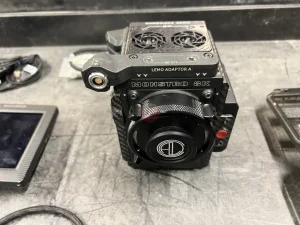
Cinematographers are no longer just chasing pixels. Following CP+ 2026, the industry has fractured into two opposing, yet equally powerful, technological movements: the pursuit of “analog-coded” organic character versus the relentless drive for “ultra-tech” digital perfection.
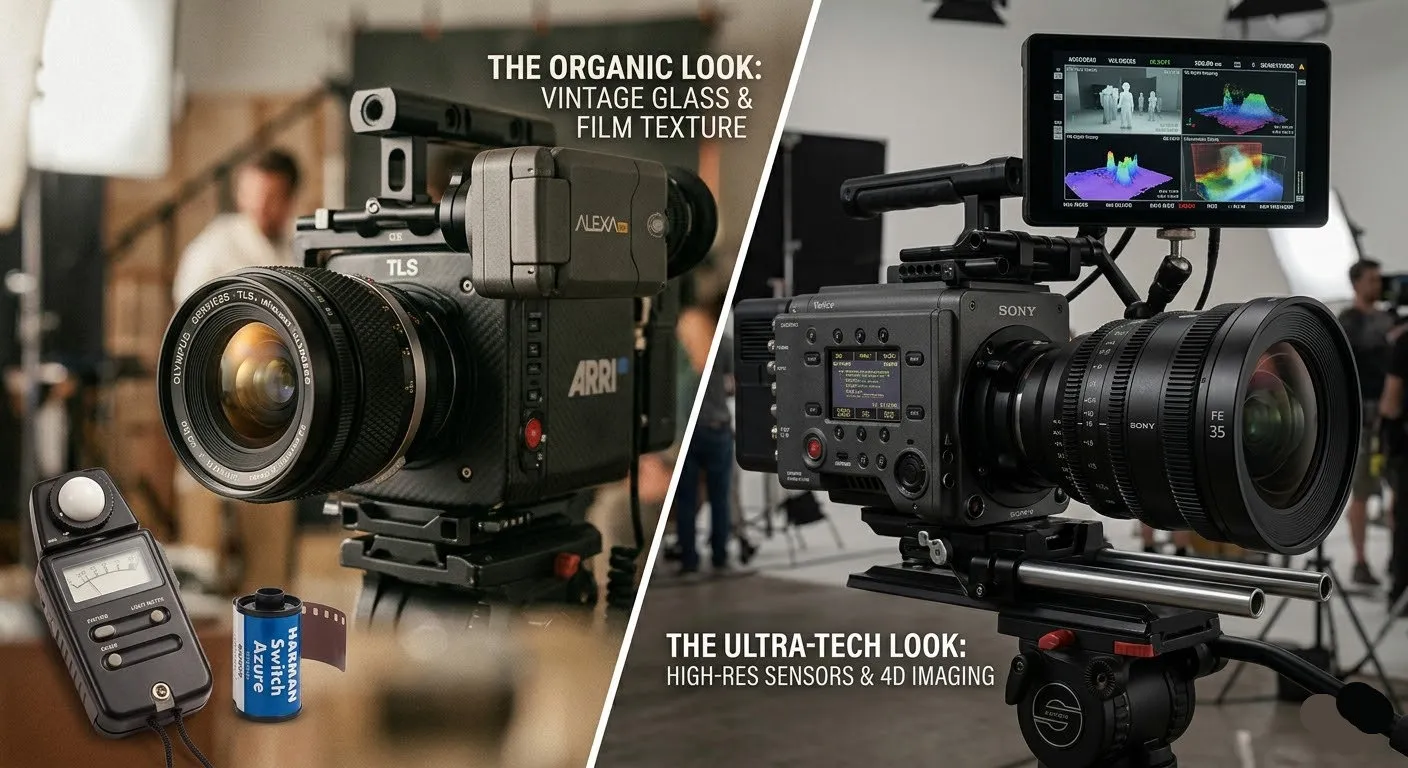
For over a decade, the definition of progress in motion capture was linear: higher resolution, wider dynamic range, and less noise. Now, a fascinating backlash is underway. Filmmakers are increasingly rejecting the sterile, AI-perfected look, seeking instead tools that introduce “imperfections” and a more human-centered aesthetic.
1. The Rebirth of “Analog-Coded” Optics: Character over Correction
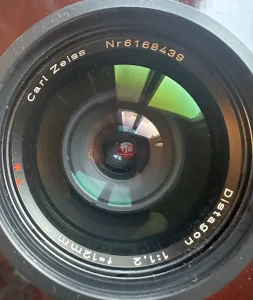
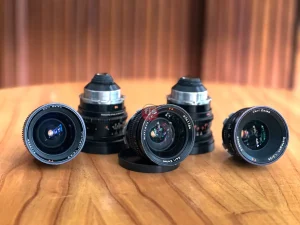
The desire for “soul” in digital acquisition has fueled a massive boom in rehoused vintage optics. Leading the charge, companies like True Lens Services (TLS) are breathing new life into legendary glass. The recent, celebrated rehousing of iconic Olympus OM lenses is a prime example. These aren’t merely old lenses with new gears; TLS performs comprehensive optical and mechanical overhauls, integrating precision cinema mechanics while meticulously preserving the distinct optical blueprints that made these lenses legendary.
- Distinctive Aesthetic: Filmmakers gain an immediately recognizable visual identity, a lookup table (LUT) cannot fully replicate the optical properties of vintage glass.
- Human-Centered Look: The inherent “imperfections” are seen by directors of photography (DPs) as adding texture and emotional weight, moving away from the clinical “CGI-ready” appearance of over-corrected lenses.
- Production Reliability: Rehoused lenses offer the unique look of vintage glass with the essential mechanical reliability required on a professional film set.
2. Emerging Hybrid Workflows and Specialized Mediums
This hunger for the analog aesthetic isn’t limited to optics. The industry is also seeing innovation in specialized recording mediums designed to “pre-texture” the digital workflow.
The recent launch of Harman’s “Switch Azure” digital-emulsion film stock is perhaps the clearest sign of this trend. While captured on a digital system, this specialized medium—used in specific hybrid recording decks or potentially, adapted sensors—is engineered to respond to light with characteristic, non-linear properties and a organic grain structure, rather than mathematically precise luminance values. This allows cinematographers to bake in a specific texture and latitude response before post-production, a stark contrast to applying film-grain emulators to clean digital files.
- Organic Pipeline: Provides a workflow that is more “film-like” from the point of capture, rather than trying to reverse-engineer that look from hyper-clean data.
- Workflow Integration: While experimental, the eventual goal is to allow these “analog-coded” formats to slide seamlessly into existing digital grading pipelines.
3. “Ultra-Tech” Defies Limits: The New High-Resolution, High-Speed Sensors
Simultaneously, the technical boundaries of pure digital imaging are being shattered. Far from retreating, companies like Sony are releasing sensors that redefine the possibilities of mathematical image capture. The development of Sony’s 68-megapixel Global Shutter sensor is a landmark technical achievement.
- Technical Perfection: This sensor provides the cleanest, highest-fidelity canvas for projects requiring immense detail and technically perfect motion, such as wildlife documentaries or action-heavy blockbusters.
- VFX Flexibility: The hyper-detailed, artifact-free image provides an ideal base for compositing and CGI.
- Future-Proofing: Offers resolution capabilities that extend far into the next decade of display technology.
4. 4D Imaging and the Volumetric Revolution
The most cutting-edge sensor development at CP+ 2026 involves the introduction of 4D imaging sensors. Where traditional sensors capture 2D slices of a 3D world (X, Y space over Time), 4D sensors are engineered to capture the entire light field, effectively mapping the direction of light rays and the depth information per pixel.
- Unprecedented Post-Production Control: Offers a paradigm shift, potentially eliminating focus-pulling errors and allowing for creative control never before possible.
- Mixed-Reality Integration: This dense depth data is invaluable for seamless integration of live action into virtual sets (like LED volumes).
Conclusion: A Dual-Track Future
The takeaway from CP+ 2026 is clear: the market is not simply advancing; it is fracturing. The rise of “analog-coded” tools is not a rejection of digital technology, but rather a mature integration of artistic intent into technological choice. We are entering an era of a dual-track technological future.