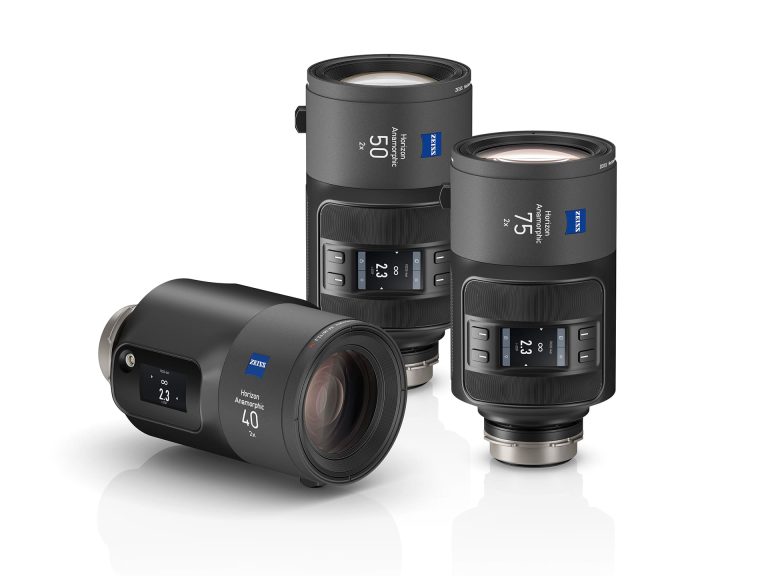
ZEISS introduces the Horizon Anamorphic Prime series, a new lineup of full-frame 2x anamorphic cinema lenses featuring integrated lens motors, interchangeable Look Tuning Back Elements, and advanced lens metadata support.
The introduction of the ZEISS Horizon Anamorphic Prime series marks a significant addition to the world of professional cinema optics. Designed for modern large-format productions, the new seven-lens lineup combines the distinctive visual characteristics of traditional 2x anamorphic lenses with integrated electronic control systems and customizable optical rendering.
The Horizon series is engineered for full-frame digital cinema cameras and incorporates several innovations intended to simplify lens control workflows while offering cinematographers greater creative flexibility.
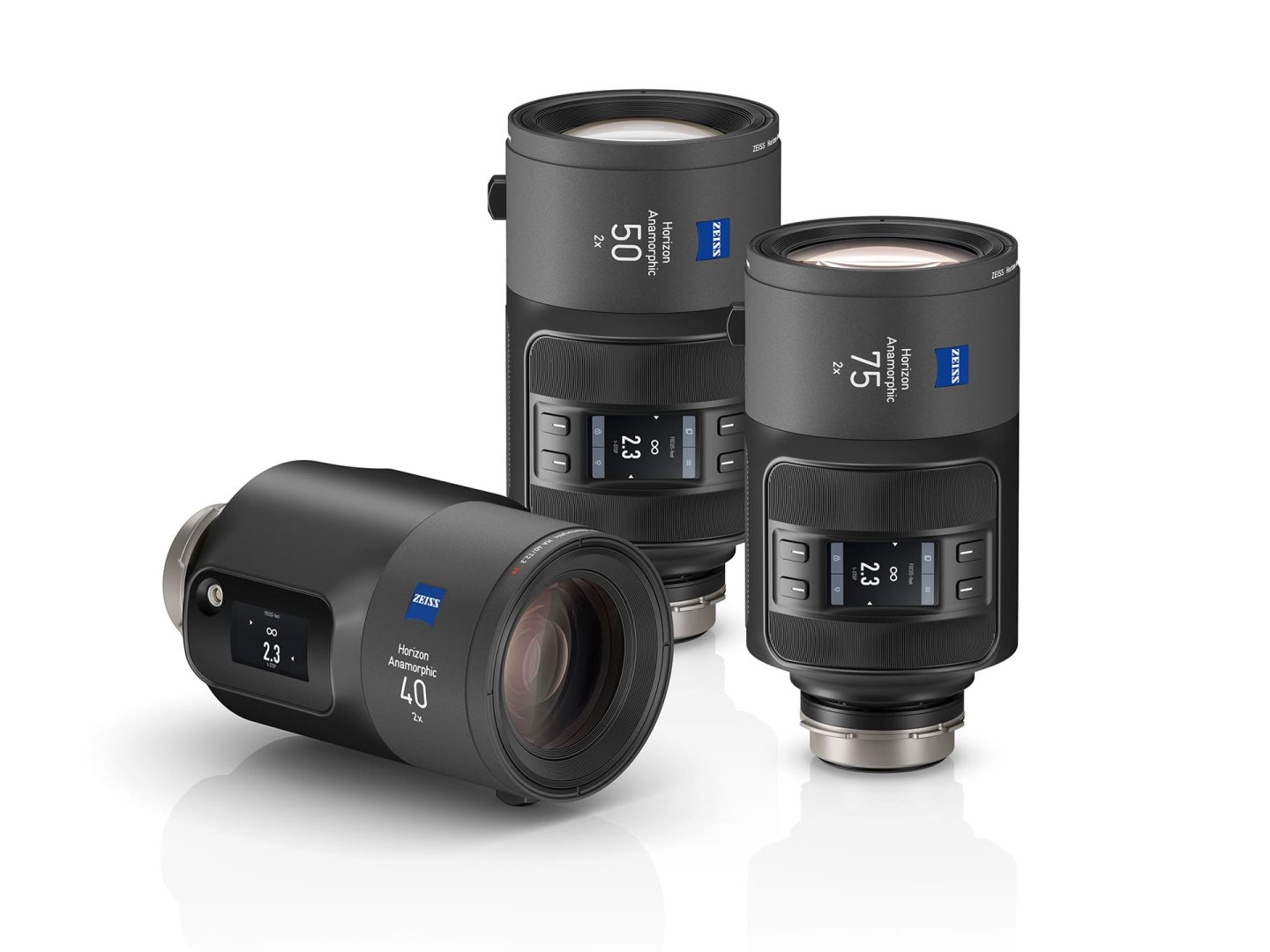
4 Key Features of the ZEISS Horizon Anamorphic Prime Series
1. Traditional 2x Anamorphic Squeeze with Full-Frame Coverage
The Horizon series maintains a classic 2x anamorphic squeeze factor, producing the characteristic oval bokeh, horizontal lens flares, and widescreen perspective long associated with anamorphic cinematography.
Unlike many compact anamorphic lenses designed around 1.33x or 1.5x squeeze ratios, the Horizon lineup fully covers modern large-format cinema sensors. The lenses are designed for full-frame image capture while remaining compatible with Super 35 cameras operating in appropriate recording modes, such as Open Gate or 4:3 sensor formats.
The initial lineup includes seven focal lengths:
- 35mm
- 40mm
- 50mm
- 75mm
- 110mm
- 150mm
- 200mm
2. Integrated Focus and Iris Motors
One of the defining features of the Horizon series is the integration of focus and iris motors directly into each lens.
Rather than requiring separate external motors mounted to support rods, the internal drive system is designed to work with compatible electronic lens control systems. This integrated approach can simplify camera builds, reduce setup time, and minimize additional accessories on productions using remote focus and iris control.
The lenses are compatible with professional lens control ecosystems, including support for ARRI’s LBUS architecture and Preston Cinema Systems.
3. Integrated Lens Displays and Electronic Controls
Each Horizon lens incorporates integrated electronic displays that provide operators and assistants with key lens information directly on the barrel.
The displays present operational data such as focus distance, iris settings, and lens status while allowing certain configuration adjustments through built-in touch-sensitive controls. This design enables quick access to lens information without relying solely on external hand units or camera menus.
4. Interchangeable Look Tuning Back Element
ZEISS introduces a modular Look Tuning Back Element (LTBE) that allows cinematographers to alter the optical rendering characteristics of the lens without replacing the entire lens set.
By exchanging the rear optical element, users can select between different image characteristics developed by ZEISS. Rather than changing focal length or mechanical operation, the LTBE system is designed to modify aspects of the lens’s overall rendering, providing creative flexibility while maintaining consistent mechanical performance across the lineup.
Key Benefits for Professional Productions
Simplified Lens Control Workflows
The integrated motor design can reduce the number of external accessories required for electronic lens control, potentially improving camera balance and streamlining setup for Steadicam, gimbal, crane, and remote-head configurations.
Consistent Optical Performance
All seven lenses share a common design philosophy intended to provide consistent color reproduction, mechanical operation, and anamorphic characteristics throughout the focal length range, making lens changes more predictable during production.
Flexible Creative Rendering
The Look Tuning Back Element system allows productions to select different optical rendering characteristics without changing to an entirely different lens family, providing additional creative options while maintaining consistent handling and mechanics.
Metadata Support
The Horizon series supports ZEISS eXtended Data technology and compatibility with professional electronic lens control systems. Lens metadata can assist productions that rely on virtual production, visual effects, and post-production workflows where accurate lens information is beneficial.
Technical Specifications
| Feature | Specification |
|---|---|
| Lens Type | Full-Frame Anamorphic Prime |
| Squeeze Factor | 2x |
| Sensor Coverage | Full-Frame / Large Format |
| Focal Lengths | 35mm, 40mm, 50mm, 75mm, 110mm, 150mm, 200mm |
| Mount | LPL |
| Integrated Motors | Focus and Iris |
| Metadata | ZEISS eXtended Data |
| Optical Customization | Look Tuning Back Element (LTBE) |
Conclusion
The ZEISS Horizon Anamorphic Prime series combines traditional 2x anamorphic imaging with modern electronic lens technologies. Its integrated focus and iris motors, support for professional lens control systems, and interchangeable Look Tuning Back Element offer cinematographers new workflow and creative options while preserving the visual qualities associated with classic anamorphic cinematography.
Designed for large-format productions, the Horizon lineup expands ZEISS’s cinema lens portfolio with a system intended for feature films, premium television, commercial production, and virtual production environments.
Questions & Answers
Q: Can Horizon Anamorphic lenses be used on Super 35 cameras?
A: Yes. Although the lenses are designed for full-frame sensors, they can be used on compatible Super 35 cameras operating in recording modes such as 4:3 or Open Gate, depending on the camera’s capabilities and the desired aspect ratio.
Q: Do the integrated motors eliminate the need for external follow-focus motors?
A: For productions using compatible electronic lens control systems, the built-in focus and iris motors can reduce or eliminate the need for externally mounted lens motors, simplifying camera builds and reducing additional hardware.
Q: What does the Look Tuning Back Element change?
A: The interchangeable Look Tuning Back Element modifies the overall optical rendering characteristics of the lens while preserving its focal length and mechanical operation. It provides cinematographers with additional creative options without requiring an entirely different lens set.