100G Ethernet is moving further into high-end film and immersive production, with systems such as Blackmagic Design’s URSA Cine Immersive 100G using SMPTE ST 2110 for live 8K stereoscopic video transport. Combined with high-speed network storage and 100G media infrastructure, the technology is creating new workflows for live immersive production and collaborative post-production.
High-resolution cinema cameras have traditionally separated image capture from live production and network infrastructure. Cameras record to local media, while video distribution, monitoring and post-production generally rely on separate systems.
That distinction is beginning to change.
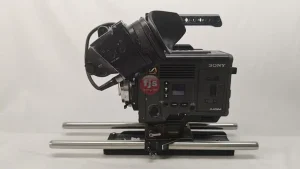
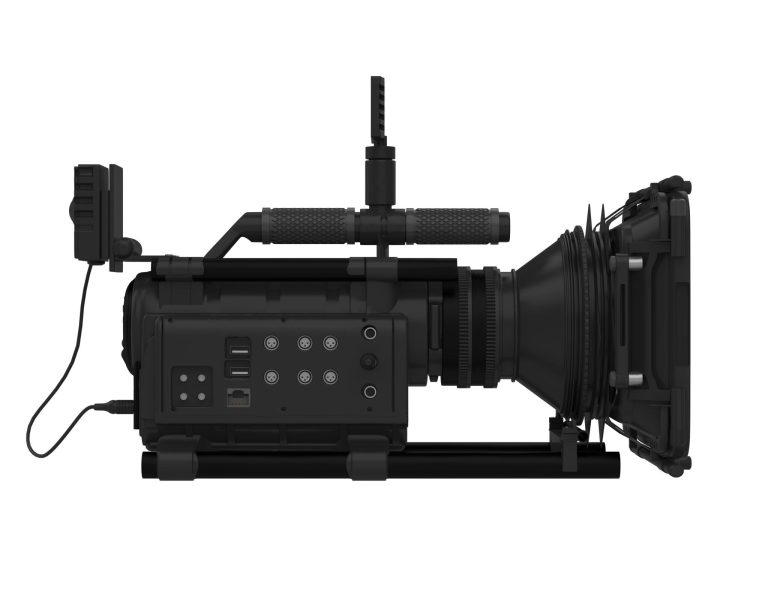
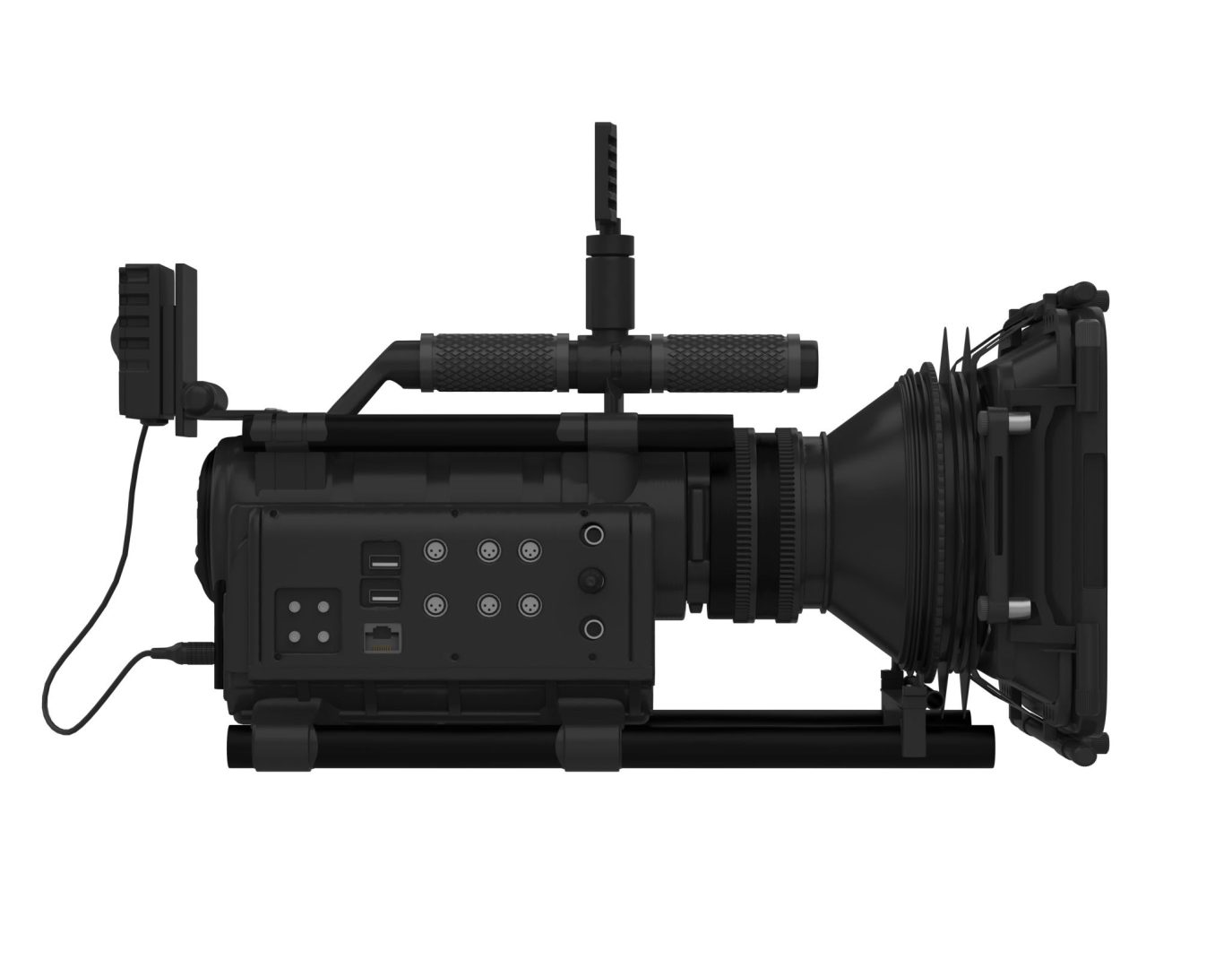
The emergence of 100G Ethernet in cinema-oriented equipment is creating a direct connection between high-resolution cameras, professional IP video infrastructure and high-speed shared storage. Blackmagic Design’s URSA Cine Immersive 100G, announced at NAB 2026, is one of the clearest examples. The camera combines two 8K × 8K RGBW sensors with 100G Ethernet designed for SMPTE 2110 live video output.
The important distinction is that the 100G connection is not a replacement for the camera’s recording media. The URSA Cine Immersive 100G includes an 8TB Blackmagic Media Module for recording, while its 100G networking capability is designed primarily around live IP video transport.
This creates a different proposition from a conventional “camera-to-NAS” recording system: the same high-speed IP infrastructure can carry live immersive video while separate storage infrastructure provides rapid access to recorded camera media.
1. 100G Ethernet Brings Immersive Cameras Into IP Production
The most significant development is the addition of 100G Ethernet to an immersive cinema camera.
The URSA Cine Immersive 100G features two 8K × 8K RGBW sensors, operating at up to 90 frames per second and offering 16 stops of dynamic range. Its 100G Ethernet interface is intended for SMPTE 2110 live video output.
For live production, Blackmagic’s URSA Live Encoder provides the bridge between the camera’s immersive image capture and the IP production environment. The encoder converts the live immersive video into Apple ProRes and outputs it as SMPTE ST 2110-22 IP video through the camera’s 100G Ethernet connection.
This is fundamentally different from sending the camera’s native Blackmagic RAW recording directly to a network storage array.
Instead, the architecture separates two functions:
Camera recording:
Camera → Blackmagic Media Module → Post-production
Live IP production:
Camera → URSA Live Encoder → 100G Ethernet → SMPTE 2110 infrastructure
That separation allows the same camera platform to support both conventional cinema recording and live immersive production.
2. Why 100G Matters for Stereoscopic 8K Video
Immersive cameras have unusually high data requirements because stereoscopic capture involves separate left-eye and right-eye image streams.
The URSA Cine Immersive 100G uses two 8K × 8K sensors, one for each eye. Blackmagic specifies operation at up to 90 fps for the immersive camera.
A 100G network connection provides substantially more capacity than a single 12G-SDI connection, making it possible to transport high-bandwidth live video through a modern IP infrastructure rather than relying solely on conventional point-to-point video cabling.
Blackmagic states that the camera’s data rate is below 50 Gb/s, allowing two cameras to be combined onto a single 100G Ethernet connection in the company’s live-production architecture.
This is one of the more important practical advantages of the system: 100G networking is not simply about achieving a large theoretical bandwidth figure. It can also consolidate multiple high-bandwidth video sources onto a common network infrastructure.
3. SMPTE ST 2110 Separates Media Into IP Streams
SMPTE ST 2110 provides a standardized framework for transporting professional media over managed IP networks.
Rather than treating video, audio and associated data as a single conventional video signal, ST 2110 defines separate essence streams that can be transported through the same network and synchronized using common timing references.
This approach allows professional facilities to build video infrastructure around high-speed Ethernet switches, network interfaces and fiber connections rather than relying exclusively on dedicated SDI routing hardware.
ST 2110 is therefore best understood as a professional media-over-IP framework, not as a cinema RAW recording format.
The distinction is important because an ST 2110 workflow can transport different types of media depending on the applicable ST 2110 component or profile. In the URSA Cine Immersive 100G workflow, Blackmagic specifically identifies SMPTE 2110-22 for the ProRes live video output from the URSA Live Encoder.
4. High-Speed Storage Still Plays a Critical Role
Moving live video onto an IP network does not eliminate the need for fast camera media.
The URSA Cine Immersive 100G includes an 8TB Blackmagic Media Module for recording. Recorded material can subsequently be integrated into high-speed post-production infrastructure through products such as the Blackmagic Media Dock Ultra.
The Media Dock Ultra can accommodate up to three Blackmagic Media Modules and provides two 100G Ethernet connections. Blackmagic says the two ports can be used with multiple editing stations and can provide up to 200 Gb/s of aggregate network bandwidth when configured appropriately with a managed switch.
This creates a powerful post-production model:
Camera → Media Module → Media Dock Ultra → 100G network → multiple workstations
Instead of repeatedly copying media from one physical drive to another, multiple authorized workstations can access the camera media through the shared network infrastructure.
That can be particularly useful for productions where editorial, color, VFX or replay operators need access to the same material.
5. Network Storage Extends the 100G Workflow
Blackmagic’s Cloud Store Ultra provides another component of the high-speed storage ecosystem.
The system is designed as high-performance network storage for film and television workflows and offers up to 48TB of capacity, RAID 5 support and two independent 100G Ethernet connections. Blackmagic states that the two network connections allow recording and editing operations to run simultaneously without one workflow interfering with the other.
This does not mean that every 100G cinema workflow automatically achieves 12.5 GB/s of usable storage performance. The theoretical line rate of 100 Gb/s is equivalent to 12.5 GB/s before protocol and system overhead, while actual storage performance depends on the storage architecture, network configuration, workload and connected devices.
The significance of 100G storage is therefore less about one guaranteed transfer speed and more about providing sufficient network capacity for multiple high-bandwidth clients and workflows.
6. Collaborative Post-Production Becomes More Practical
High-speed networking can also change how teams interact with recorded media.
The Media Dock Ultra is designed to allow multiple workstations to connect to shared camera media, while Blackmagic Cloud can provide additional synchronization capabilities. Blackmagic specifically describes the system as supporting multiple editing stations through its 100G connections.
For a production environment, this can reduce the need to create numerous duplicate copies of the same camera media before different departments can begin working.
The result is not necessarily “instant editing” in every production. Network performance still depends on the complete infrastructure, including storage, switches, network interfaces, workstations and file-management practices.
But the architecture can substantially shorten the distance between camera media and the people who need to work with it.
7. Immersive Live Production Is the Most Immediate Application
The strongest current application for 100G in this ecosystem is live immersive production.
The URSA Cine Immersive 100G was specifically designed to bring immersive cinema capture into live production. Blackmagic describes it as a camera for live immersive production using dual 8K × 8K sensors, 100G Ethernet and SMPTE 2110.
Blackmagic also reports that the camera was used for Spectrum Front Row, a series of live Lakers games delivered in Apple Immersive during the 2025–2026 season.
This demonstrates a practical use case for the technology: immersive imagery can be captured using a cinema-oriented camera architecture while simultaneously entering a professional live IP production environment.
That is a more concrete development than the idea of replacing every cinema camera’s onboard recording media with network storage.
8. 100G Is Also Expanding Beyond Immersive Cameras
The technology is not limited to stereoscopic production.
Blackmagic has also introduced the URSA Cine 12K LF 100G, which uses 100G Ethernet for SMPTE 2110 live production and can output high-frame-rate live video. The company specifies live SMPTE 2110 output up to 440 fps for that model.
This suggests a broader direction for cinema equipment: high-end digital film cameras are increasingly being designed to participate directly in IP-based production environments.
Instead of thinking of a cinema camera solely as a recording device, manufacturers are increasingly treating it as one component of a larger networked production system.
Key Technologies
100G Ethernet
Provides the high-bandwidth network connection used by compatible cinema and live-production equipment. The URSA Cine Immersive 100G uses a 100G Ethernet interface for SMPTE 2110 live video output.
SMPTE ST 2110
A professional media-over-IP standard that enables video, audio and ancillary data to be transported as separate synchronized streams across managed IP networks.
SMPTE 2110-22
Used by Blackmagic’s URSA Live Encoder to transport compressed ProRes live immersive video over the 100G network connection.
100G QSFP28
Blackmagic’s Media Dock Ultra uses two 100G QSFP28 Ethernet connections, with each port capable of independent network configuration.
Blackmagic Media Modules
The removable storage used by compatible URSA Cine cameras. The URSA Cine Immersive 100G includes an 8TB Media Module for recording.
High-Speed Shared Storage
Systems such as the Media Dock Ultra and Cloud Store Ultra allow recorded media to become accessible through high-speed network infrastructure rather than requiring every workstation to maintain its own isolated copy.
Key Benefits
High-Bandwidth Live Video
100G Ethernet provides the capacity required for high-resolution immersive live video and allows compatible cameras to integrate with professional IP production systems.
Shared Media Access
100G storage infrastructure can allow multiple workstations to access camera media through the same high-speed network.
Reduced Physical Media Handling
Once camera media is mounted in a compatible high-speed dock, production teams can work with centralized network access instead of repeatedly connecting individual drives to individual workstations.
Scalable IP Infrastructure
Ethernet-based production infrastructure can support switches, network interfaces, fiber connections and other standardized networking equipment alongside professional video systems.
Integration of Cinema and Live Production
Perhaps the biggest development is the convergence of traditionally separate workflows. Cinema cameras can now participate in live IP production without abandoning their high-resolution recording capabilities.
What 100G Does — and Does Not — Replace
It is important not to overstate the technology.
A 100G connection does not automatically mean that a cinema camera can record uncompressed RAW directly to a NAS. The URSA Cine Immersive 100G still uses its Media Module for recording, while its 100G interface is designed for live IP video output.
Likewise, 100G networking does not guarantee a particular storage throughput, eliminate all data-transfer requirements or remove the computational requirements associated with decoding and processing camera footage.
The more realistic transformation is architectural.
Instead of:
Camera → local recording → manual media transfer → individual workstations
high-speed IP infrastructure makes workflows such as these possible:
Camera → 100G IP production network → live production
and:
Camera → Media Module → 100G Media Dock → shared post-production network
These are complementary workflows rather than a complete replacement of one by the other.
Conclusion
100G Ethernet is becoming an important part of the next generation of high-end video infrastructure.
The arrival of products such as Blackmagic Design’s URSA Cine Immersive 100G demonstrates that cinema cameras can now connect directly to professional IP production environments with bandwidth suitable for demanding immersive video applications. Its dual 8K × 8K sensors, 90 fps operation and 100G Ethernet interface bring stereoscopic cinema capture into a live-production architecture built around SMPTE 2110.
At the same time, products such as the Media Dock Ultra and Cloud Store Ultra demonstrate how the same networking philosophy can extend into post-production, where high-speed shared storage can provide multiple workstations with access to camera media.
The important development is therefore not the disappearance of camera media or the arrival of universal direct-to-NAS RAW recording.
It is the emergence of a networked production architecture in which cameras, live production systems, storage and post-production workstations can operate over increasingly high-bandwidth IP infrastructure.
For immersive production, live sports, large-scale events and other demanding applications, 100G Ethernet could become an increasingly important bridge between the traditional digital cinema workflow and the networked production environment.
Frequently Asked Questions
Q: Does the URSA Cine Immersive 100G record directly to a NAS over 100G Ethernet?
A: Not according to Blackmagic’s published specifications. The camera includes an 8TB Blackmagic Media Module for recording, while its 100G Ethernet connection is used for SMPTE 2110 live video output.
Q: What does the URSA Live Encoder do?
A: The URSA Live Encoder processes the live immersive signal and encodes it into Apple ProRes for output as SMPTE 2110-22 IP video through the camera’s 100G Ethernet connection.
Q: Can multiple editors access camera media through 100G networking?
A: Yes. Blackmagic’s Media Dock Ultra supports up to three Media Modules and provides two 100G Ethernet ports specifically for high-speed network sharing and multiple editing stations.
Q: Does 100G Ethernet mean 12.5 GB/s of actual storage performance?
A: No. 100 Gb/s is the nominal network line rate, equivalent to 12.5 GB/s before overhead. Actual usable performance depends on the storage system, network configuration, protocols and workload.
Q: Is SMPTE ST 2110 a RAW recording format?
A: No. ST 2110 is a professional media-over-IP framework. The specific media format transported depends on the implementation. In Blackmagic’s immersive live workflow, the URSA Live Encoder uses ProRes for SMPTE 2110-22 output.
Q: Is 100G Ethernet only useful for immersive cinema?
A: No. Blackmagic has also introduced the URSA Cine 12K LF 100G for high-frame-rate SMPTE 2110 live production, demonstrating that the technology can apply to other cinema-camera workflows as well.