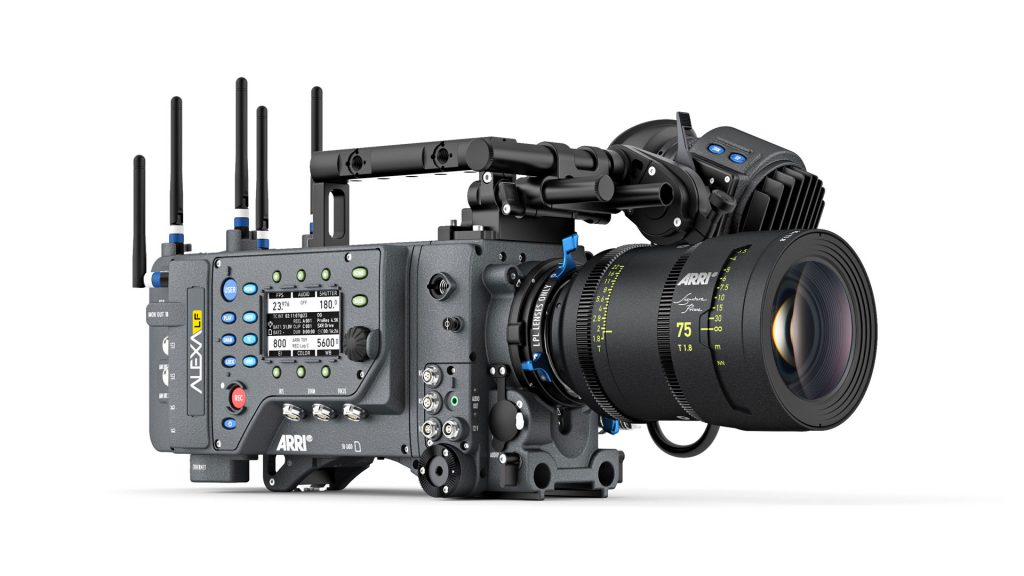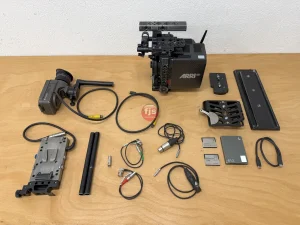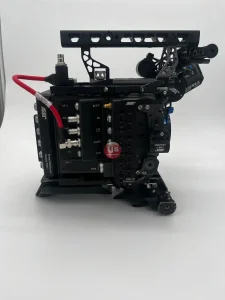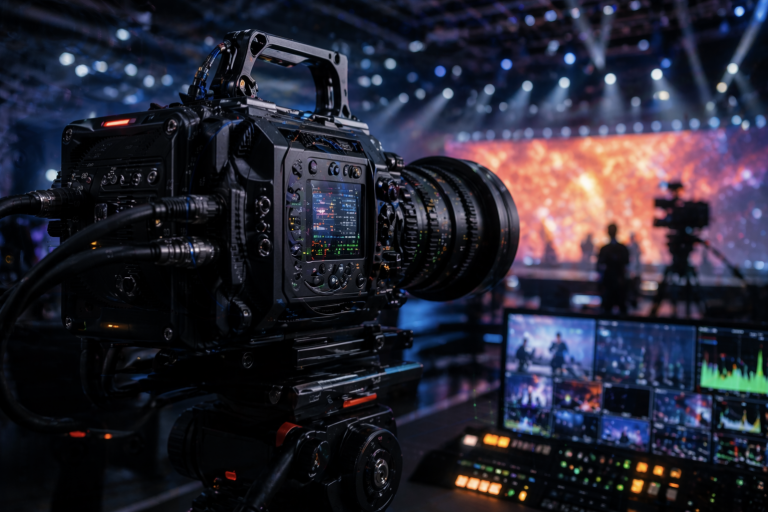
Blackmagic’s URSA Cine 12K LF 100G blends large-format cinema imaging with high-speed live production tools, reshaping hybrid workflows for modern filmmakers.
The line between traditional cinema cameras and broadcast systems is disappearing rapidly. At NAB 2026, the Blackmagic Design URSA Cine 12K LF 100G emerged as one of the most discussed camera systems after receiving a major industry award for innovation in professional image capture.
What makes the camera especially important is not just its 12K large-format sensor, but how Blackmagic is integrating 100 Gigabit Ethernet connectivity, cloud workflows, and live production compatibility into a cinema platform. The result is a camera designed for productions that now demand both cinematic image quality and instant delivery.
Blackmagic Design is no longer simply building cameras for filmmakers. It is building connected ecosystems for hybrid production.
Blackmagic URSA Cine 12K LF 100G
NAB Show 2026

1. A 12K Sensor Built for Large-Format Cinematography
At the center of the URSA Cine system is a full-frame large-format RGBW sensor capable of delivering exceptional detail while maintaining dynamic range for professional productions.
Key Features
- 12K resolution capture
- Large-format sensor architecture
- Wide dynamic range
- High frame-rate recording
- Advanced color science
Benefits
- Greater reframing flexibility
- Better VFX extraction
- Cleaner downsampled 4K delivery
- Improved skin tones
- Superior cinematic depth
The oversampled sensor allows productions to capture more data than they need today while preserving future flexibility for remastering.
2. 100G Ethernet Changes On-Set Data Handling
One of the biggest talking points is the inclusion of 100 Gigabit Ethernet, an unusual feature in a cinema camera.
This allows direct high-speed transfer to:
- Shared storage
- Cloud servers
- Broadcast infrastructure
- Remote post facilities
Key Features
- Built-in 100G Ethernet
- Fast network offload
- Cloud sync support
- Shared storage integration
- Remote workflow support
Benefits
- Faster media transfers
- Reduced downtime
- Real-time collaboration
- Fewer card swaps
- More efficient production pipelines
For productions shooting massive 12K RAW files, data transfer can become as critical as the image itself.
3. Broadcast and Cinema Workflows Are Converging
Blackmagic’s strategy shows a larger industry shift: modern productions increasingly need a single camera that can serve both cinema and live environments.
The URSA Cine supports:
- Multi-camera workflows
- Live grading
- Remote shading
- IP-based production
- Instant review systems
Key Features
- Broadcast control support
- SDI connectivity
- IP workflow compatibility
- Live production integration
- Remote monitoring
Benefits
- One camera for multiple uses
- Lower equipment costs
- Smaller crew needs
- Faster deployment
- More versatile productions
This is especially valuable for:
- Concert films
- Sports documentaries
- Live events
- Streaming productions
- Virtual production stages
4. Blackmagic Cloud Becomes More Important
The camera also strengthens the company’s growing Blackmagic Cloud ecosystem.
Users can:
- Upload proxies automatically
- Share footage instantly
- Edit remotely
- Review dailies worldwide
Key Features
- Automatic proxy generation
- Cloud upload tools
- DaVinci Resolve integration
- Remote project sharing
- Secure collaboration
Benefits
- Global collaboration
- Faster approvals
- Remote editing
- Lower travel costs
- Better production flexibility
Cloud workflows are becoming essential as productions become increasingly distributed.
5. Blackmagic Continues Disrupting Premium Pricing
Perhaps the most disruptive element is Blackmagic’s continued effort to deliver advanced technology at lower pricing than traditional cinema brands.
Professionals are watching closely because the company consistently offers:
- High resolution
- Advanced codecs
- Premium color science
- Workflow innovation
- Competitive pricing
Key Features
- Feature-rich platform
- Lower acquisition cost
- Modular design
- Software integration
- Continuous firmware support
Benefits
- Better value for productions
- More access for indie filmmakers
- Lower ownership costs
- Higher production quality
- Faster ROI
The challenge remains whether reliability can consistently match top-tier broadcast expectations.
Common Questions and Answers
What makes the URSA Cine 12K unique?
Its combination of 12K imaging and 100G Ethernet networking makes it unusual among cinema cameras.
Why does 100G Ethernet matter?
It enables extremely fast transfer of large RAW files directly into storage or live workflows.
Is it for cinema or broadcast?
It is designed for both, making it a hybrid production tool.
Does it support remote workflows?
Yes, Blackmagic integrates cloud-based collaboration into the camera ecosystem.
Who benefits most?
Large productions, virtual production teams, and advanced owner-operators benefit most.
Conclusion
The Blackmagic URSA Cine 12K LF 100G represents more than a new camera. It reflects a broader transformation in professional filmmaking where cinema image quality and broadcast infrastructure are merging into one workflow.
Blackmagic is betting that the future of production belongs to cameras that are not only capable of stunning visuals but also built to move data as quickly as they capture it. For many filmmakers, that may define the next generation of digital cinema.