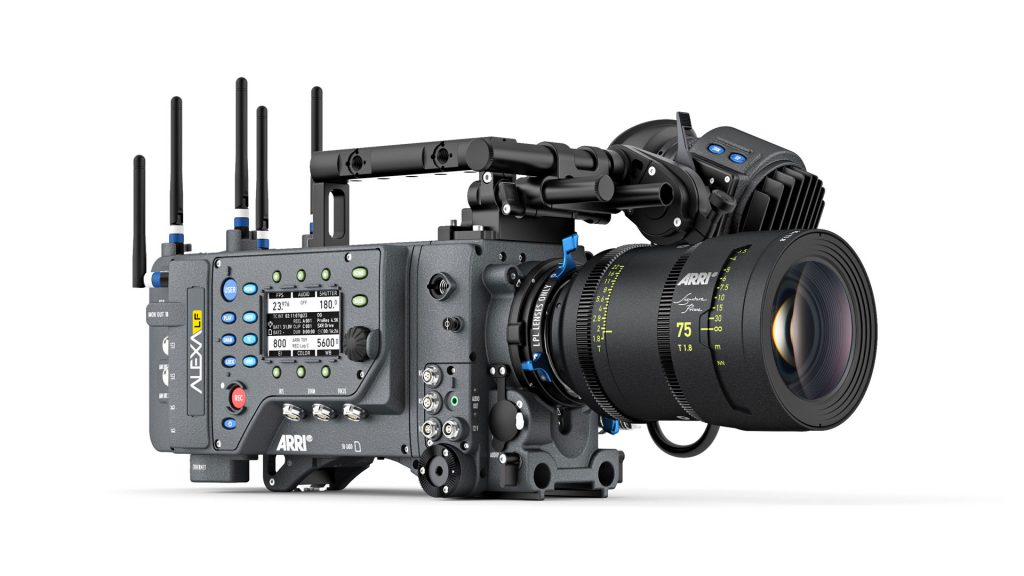
Large-format cinema cameras are reshaping filmmaking with immersive sensors, flexible optics, IMAX workflows, and compact full-frame systems.

The large-format cinema revolution is no longer limited to premium Hollywood productions or flagship camera systems from legacy manufacturers like ARRI and Sony. In 2026, the industry is seeing an aggressive expansion of large-format digital cinematography into independent filmmaking, documentary production, virtual production, commercial work, and lightweight owner-operator workflows.
At the center of this movement is the FUJIFILM GFX ETERNA 55, a large-format cinema camera platform built around an oversized sensor architecture and supported by growing optical flexibility. Alongside it, manufacturers such as Kinefinity are pushing compact full-frame cinema systems that target mobile productions and modern digital cinema pipelines.
The result is a rapidly evolving cinematography landscape where large-format capture is becoming a mainstream creative standard rather than a niche luxury format.
1. Why Large-Format Cinema Cameras Are Growing So Fast
Large-format cinema cameras offer several visual and technical advantages over traditional Super 35 workflows. These systems typically feature full-frame or larger sensors that deliver wider fields of view, shallower depth of field, improved tonal separation, and enhanced low-light performance.
Modern streaming platforms, premium commercial productions, and IMAX-oriented workflows are accelerating the demand for higher-resolution large-sensor acquisition. Cinematographers are increasingly adopting these systems for their immersive visual rendering and cinematic texture.
Key industry drivers include:
- IMAX-certified digital cinema workflows
- Virtual production compatibility
- Higher dynamic range requirements
- Improved lens character rendering
- Demand for cinematic shallow depth of field
- Premium streaming content production
- Open-gate recording flexibility
- Advanced HDR mastering pipelines
2. FUJIFILM GFX ETERNA 55 Pushes Large-Format Further
One of the most discussed developments in modern cinematography is the emergence of the GFX ETERNA 55 system from FUJIFILM.
Unlike traditional cinema cameras that evolved from broadcast or DSLR ecosystems, the GFX ETERNA platform leverages FUJIFILM’s large-format imaging heritage. The oversized sensor design allows cinematographers to capture a highly immersive image with distinctive dimensionality and smoother perspective transitions.
Key Features of the GFX ETERNA 55
- Large-format sensor architecture
- IMAX certification compatibility
- Open-gate recording workflows
- Advanced color science inherited from FUJIFILM imaging systems
- Flexible lens adaptability
- Enhanced shallow depth of field rendering
- High-resolution cinematic capture
- Improved tonal roll-off and texture reproduction
Benefits for Cinematographers
Immersive Image Rendering
The larger imaging area creates a cinematic perspective that many cinematographers describe as more natural and organic compared to smaller formats.
Greater Optical Flexibility
The camera supports a wider range of lens characteristics, allowing productions to combine modern cinema glass with vintage large-format optics.
Premium Production Value
Large-format imagery increasingly signals premium production quality for streaming platforms, branded content, and theatrical delivery.
Better Low-Light Performance
Larger sensors generally collect more light, improving shadow retention and noise control in demanding lighting conditions.
3. Kinefinity Targets Lightweight Full-Frame Cinema
While large-format systems were once associated with bulky high-budget productions, companies like Kinefinity are changing that perception.
Kinefinity’s Vista platform demonstrates how compact cinema cameras are beginning to integrate full-frame and large-format imaging into smaller production ecosystems.
Key Features of Compact Large-Format Systems
- Lightweight modular bodies
- Full-frame cinematic sensors
- Mobile-friendly production rigs
- Lower power consumption
- Flexible recording codecs
- Compact gimbal compatibility
- Reduced production footprint
Benefits for Modern Productions
Better Mobility
Independent filmmakers and documentary operators can now access cinematic large-format imagery without massive production infrastructure.
Lower Operating Costs
Smaller modular systems reduce crew requirements and simplify transportation logistics.
Faster Production Workflows
Compact cinema systems accelerate setup times for run-and-gun productions, commercials, and live event cinematography.
4. The Debate Around Large-Format Cinematography
Despite the enthusiasm surrounding large-format cinema cameras, industry discussions remain divided regarding whether extremely large sensors genuinely improve storytelling.
Some cinematographers argue that sensor size alone does not create emotional impact. Others believe the visual immersion and dimensionality of large-format imagery significantly enhance cinematic storytelling.
Key concerns include:
- Expensive large-format lens ecosystems
- Increased storage requirements
- Higher post-production costs
- Demanding focus-pulling precision
- Workflow complexity
- Data management challenges
Nevertheless, large-format adoption continues accelerating across feature films, streaming productions, documentaries, commercials, and virtual production environments.
5. Emerging Industry Trends in Large-Format Cinema
Several important trends are shaping the future of large-format digital cinematography:
IMAX-Ready Digital Production
Manufacturers increasingly market cameras around IMAX certification and premium theatrical workflows.
Hybrid Optical Ecosystems
Lens adaptability is becoming a critical selling point for large-format systems.
Virtual Production Integration
Large sensors are increasingly paired with LED volume production and real-time rendering pipelines.
Compact Cinema Evolution
Manufacturers are focusing on making full-frame cinema more accessible for owner-operators and small crews.
Streaming Platform Standards
Premium streaming content continues driving demand for higher-end cinematic acquisition formats.
Frequently Asked Questions
What is a large-format cinema camera?
A large-format cinema camera uses a full-frame or larger imaging sensor designed to deliver wider fields of view, shallower depth of field, and enhanced cinematic rendering.
Is large-format better than Super 35?
Not necessarily. Large-format offers different visual characteristics, but Super 35 remains widely used because of its lens ecosystem, workflow simplicity, and familiar cinematic language.
Why are filmmakers interested in large-format sensors?
Many cinematographers prefer the immersive depth, smoother perspective rendering, improved low-light performance, and premium cinematic appearance.
Does large-format increase production costs?
Yes. Large-format workflows often require more expensive lenses, higher storage capacity, larger crews, and more demanding post-production infrastructure.
What makes the FUJIFILM GFX ETERNA 55 important?
The GFX ETERNA 55 combines oversized sensor cinematography with modern cinema workflows and IMAX-oriented production capabilities.
Are compact full-frame cinema cameras replacing traditional cinema rigs?
Not entirely. However, compact full-frame systems are rapidly expanding into documentaries, commercials, and mobile productions.
Conclusion
Large-format digital cinematography is evolving from a specialized premium format into a broader industry standard. Systems like the GFX ETERNA 55 from FUJIFILM and compact full-frame platforms from Kinefinity demonstrate how manufacturers are redefining cinematic imaging for modern production environments.
As streaming platforms, IMAX workflows, and virtual production continue reshaping filmmaking, large-format capture is likely to become increasingly common across productions of every scale. The debate around storytelling versus technical spectacle will continue, but the momentum behind large-format cinema is undeniable.