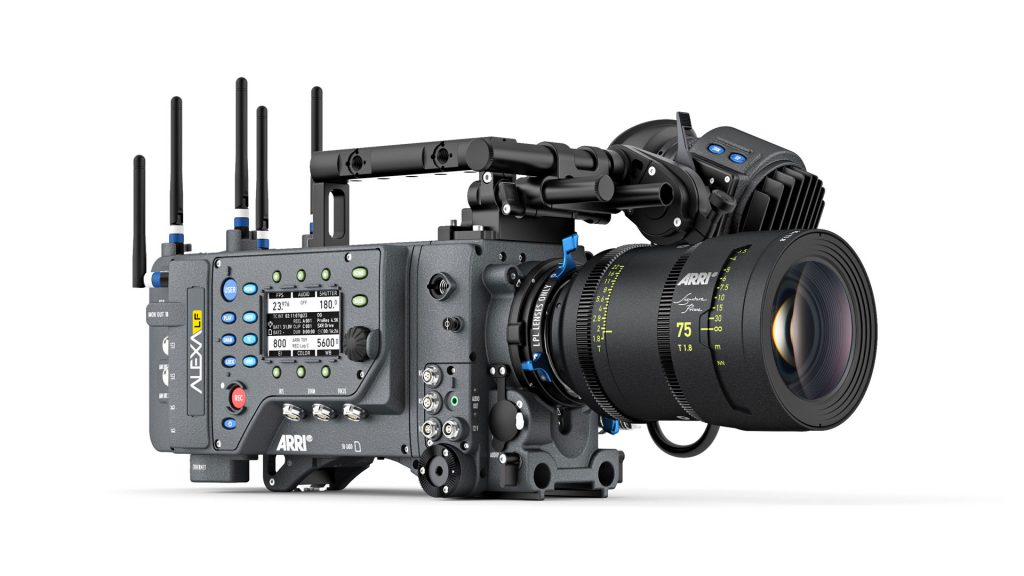
Ever wondered what those black bars at the top and bottom of your widescreen TV mean when watching an older movie? They’re there for a reason! These films were shot in anamorphic format, capturing a wider image than standard TVs could display. Modern technology offers software de-squeezing to fill the screen, but is it truly better than the classic black bars? Let’s explore both sides.
De-Squeezing: Filling Every Inch
- Full Screen Glory: De-squeezing eliminates the black bars, giving you the full picture and maximizing your screen real estate.
- Enhanced Immersion: By filling the entire screen, de-squeezing can create a more immersive viewing experience, drawing you deeper into the action.
- Potential Detail Boost: In some cases, de-squeezing can reveal details that were previously hidden within the black bars.
- Convenience Factor: De-squeezing is often readily available on TVs and media players, making it an easy on-the-fly solution.
Beyond the List: A Closer Look
De-squeezing achieves its goal by mathematically stretching the image to fill the screen. While this increases the picture size, it doesn’t guarantee true anamorphic quality:
- Loss of Information: Stretching can create interpolation, where new pixels are generated to fill gaps. This can result in a loss of image sharpness and fine details.
- Distorted Aspect Ratio: Stretching can alter the original aspect ratio, making objects appear elongated or squished.
- Limited Improvement: De-squeezing only recovers information already encoded in the video. It can’t create details that weren’t captured during filming.
Black Bars: Preserving the Vision
While they might seem like wasted space, black bars with anamorphic content serve a purpose:
- Accurate Representation: Black bars maintain the original aspect ratio and image integrity as intended by the filmmakers.
- Preserved Detail: You see the movie exactly as it was filmed, without any distortion or loss of sharpness.
Conclusion: The Choice is Yours
Software de-squeezing offers a convenient way to fill your screen while watching anamorphic movies. However, it comes with a trade-off in potential image quality. Black bars, on the other hand, preserve the director’s vision and the film’s original details. Ultimately, the choice depends on your viewing preferences.
Q&A
- Is de-squeezing always a bad idea?
Not necessarily! If you prioritize a larger image and don’t mind some potential quality loss, de-squeezing might be a good option. However, for purists who want an accurate representation of the film, black bars are the way to go.
- Are there different types of de-squeezing?
Yes, there are various algorithms used for de-squeezing, with some offering better results than others. Generally, higher-quality video processing on your TV might lead to better de-squeezed images.
- Is there a middle ground?
Some high-end TVs offer advanced scaling and processing techniques that can improve the quality of de-squeezed images. However, even these advanced methods cannot fully replicate the original anamorphic experience.